“Christian Liberté Boltanski (6 September 1944 – 14 July 2021) was a French sculptor, photographer, painter, and film maker. He is best known for his photography installations and contemporary French conceptual style.”
Wiki
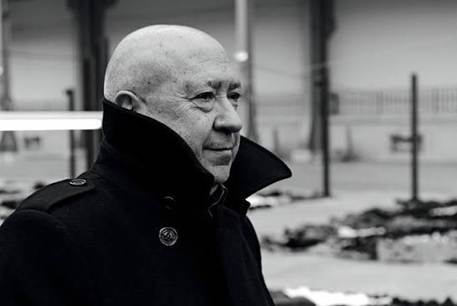
“Art making is not about telling the truth but making the truth felt.”
Christian Boltanski
I chose this Boltanski quote about making the truth felt as it speaks to me and that’s what I try to do with my art and writing essays. However, I only search for my own truths when it comes to spirituality, art, and music.
One of the first coffee table art books I bought while an undergraduate was a book about Christian Boltanski and I can’t remember the bookshops name but it was on Oxford Street Paddington opposite my art school COFA.
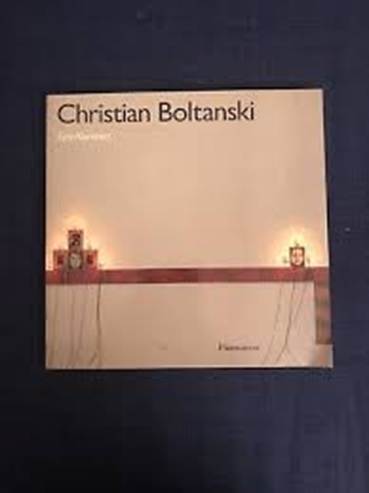
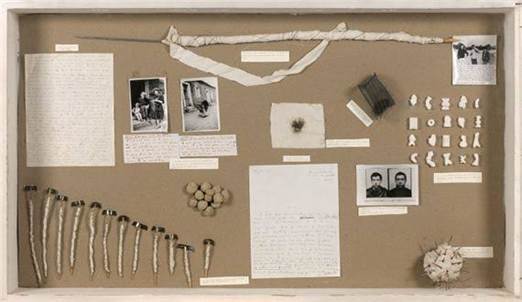
It was his early works of metal trays and shallow wooden vitrine boxes with objects and tags on them that spoke to me.
“The photo replaces the memory. When someone dies, after a while you can’t visualize them anymore, you only remember them through their pictures.”
Christian Boltanski
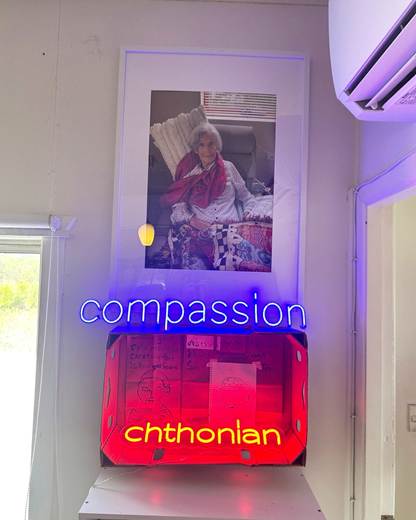
I love this quote by Boltanski and I have put up a medium size photo of my mum in my bedroom above a box with saint drawings in it and two neon’s one saying compassion in blue and another red one saying chthonian so I shall never forget her and look at her photo shortly before her passing and meditate on her everyday with compassion as its opposite my bed where I lay in bed a lot watching movies.
“I’ve filled my whole life trying to preserve the memory of living, in the fight against dying. Perhaps the only thing I’ve done, since stopping death is impossible, is to show this fight. The fight itself does not satisfy us either.”
Christian Boltanski
I love this idea of trying to preserve the memory of the living and life being a fight against the inevitability of death and this fits in with my recent study of the Dalai Lamas ideas about human mortality.
“I never take photographs myself. I don’t feel like a photographer, more like a recycler.”
Christian Boltanski
I love this quote by Boltanski about his recycling found photos and I heard he used to go to flea markets to find material for his art. I myself don’t recycle but usually present myself in staged photos.
“I was lucky to be born during the time of minimalism. I think I can be colder because of this. In form I speak with minimalism but my feeling is sentimental – I am a sentimental minimalist.”
Christian Boltanski
I also was greatly influenced by conceptual and minimal artist at art school such as Bruce Nauman. Boltanski calls himself a sentimental minimalist and I would call myself a humanised conceptual artist.
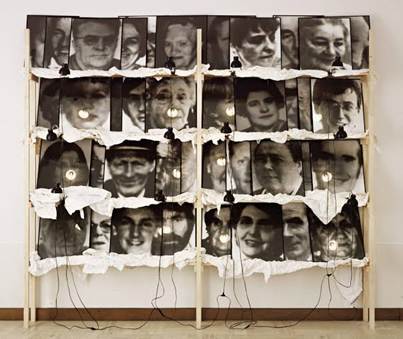
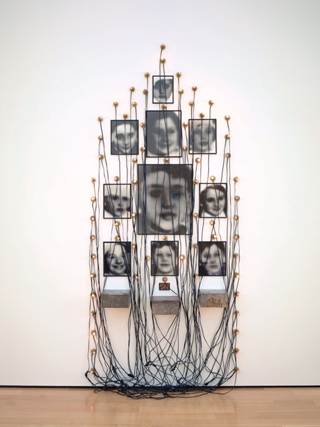
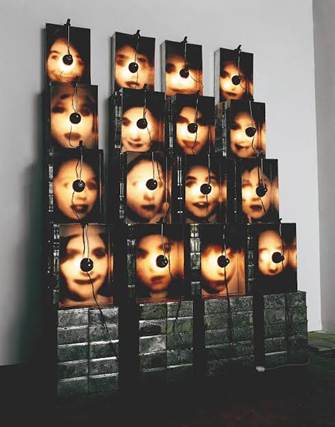
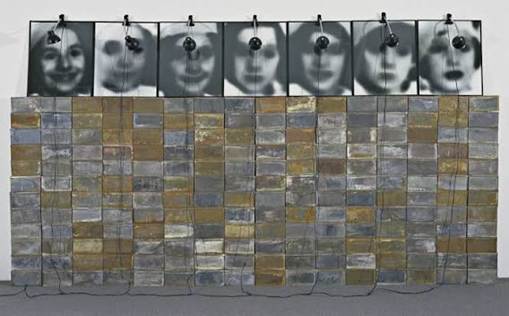
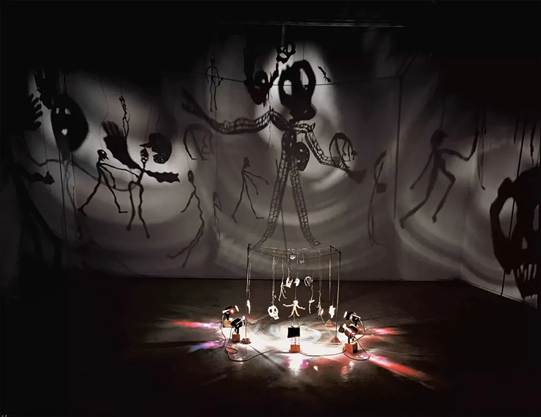
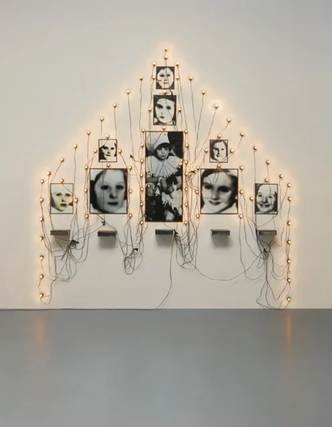
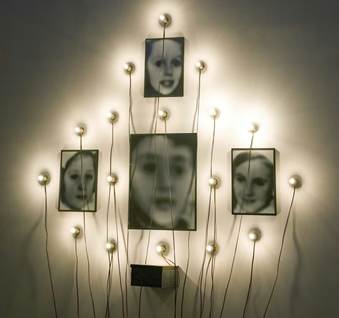
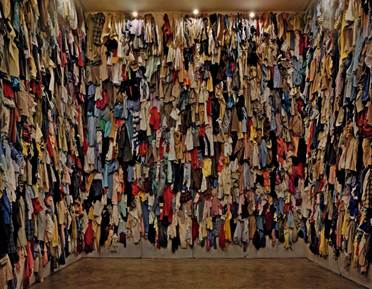
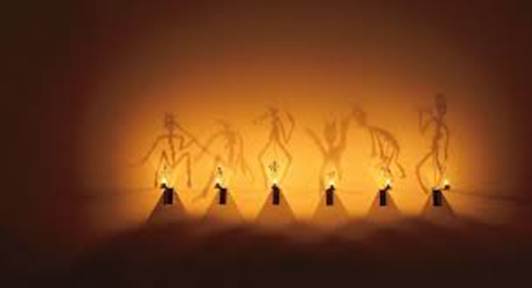
In conclusion Boltanski’s largely found photographic and sculptural installations speak of the Jewish experience in Europe and are underpinned by deep trauma but he didn’t hold onto the trauma but worked through it and surrendered it. My favourite works in hindsight were the ones where he used lights and candles and simple cardboard cut outs to project eerie shadows on walls.