
Print by Hokusai a precursor to contemporary Japanese spiritual art.
“Spirituality in contemporary Japanese art often merges ancient animism and Buddhist philosophy with technology, emphasizing interconnectedness, impermanence and the “invisible” through minimalist gestures and light. Key artists like Tatsuo Miyajima, Mariko Mori, and Yayoi Kusama, Yoshitomo Nara and Yoko Ono use light, and nature to explore the human soul, connection to the cosmos, and the blurring of self with the environment and borrow from manga comic culture.”
Google Search
A precursor to contemporary Japanese spiritual art is the great wave off Kanagawa by Hokusai that made a record sale for Japanese art at auction in Hong Kong.
“Equally dramatic was the eight-minute bidding war for Hokusai’s instantly recognizable woodblock print, The Great Wave Off the Coast of Kanagawa (1830-32). The piece, part of his famous “Thirty-Six Views of Mount Fuji” series, is arguably the most famous and most reproduced Japanese artwork in the world. Its celebrity led to the final price of $2.8 million, which was triple the amount of its high estimated value. Though various iterations of The Great Wave exist in major museums worldwide, this specific copy drew extraordinary competition.”
Tokyo Weekender
My favourite contemporary spiritual Japanese artists are Yayoi Kusama, Mariko Mori and Yoshitomo Nara except Yoko Ono who exhibited at the AGNSW in the 2000 Sydney Biennale. While working as a preparator at the Museum of Contemporary Art Sydney they all exhibited there while I worked there at different times.
The artists I had the strongest connection with were Nara and Kusama. I started working at the MCA during the 2000 biennial and I was asked to bubble wrap and pack Aboriginal bark paintings and after walked over to a preparator named Adam and he had just changed his name to Darcy. You were supposed to be allotted jobs but Darcy was measuring up a room to build a Kusama installation and I asked if I could help and he said sure. I think I was 29 and he was 30.
I ended up helping build the installation for the rest of the install and it was a rush to have the whole biennial ready and I think I did a sixty-hour week. To be honest I was pretty hopeless even with simple tasks such as using a cordless drill to screw the stainless-steel frame together.
Instead of describing the installation in detail first I shall add a photo of it. The installation was the work in this, following image remade.
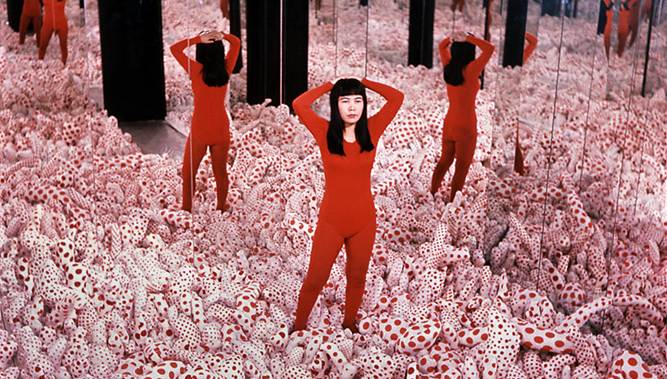
Infinity Mirror Room – Phalli’s Field
1965
The small room had a doorway and mirrors on all the walls and red and white polka dot phallic fabric forms and there was a path in the middle so when you walked into the middle it looked like yourself was multiplying and all the phallus too going off into infinity with the reflections from the mirrors.
However, it was my job to use an industrial staple gun to secure the Velcro strips to hold up the mirrors and I didn’t do it properly so during the show two of the huge mirrors fell down narrowly missing the staff minding the exhibit. I thought surely, I would get fired but Marc O’Carroll the chief preparator took it easy on me and I ended up working there for several years. Also, I think he and the other staff realised it wasn’t my fault and more of a design fault as Velcro wasn’t strong enough to hold such heavy mirrors.
Kusama also famously has health issues but pushes on working hard making new work. She became famous making outdoor performance artworks in New York in the late sixties.
I also saw a retrospective of Kusama’s work at GOMA in Brisbane the big contemporary art gallery and it was amazing. Called Life is the Heart of the Rainbow in 2018.
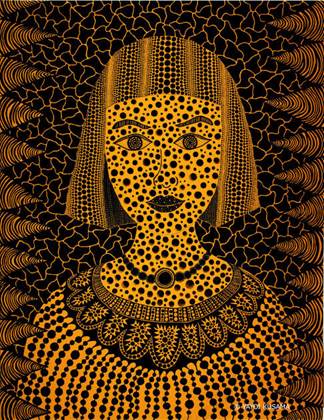

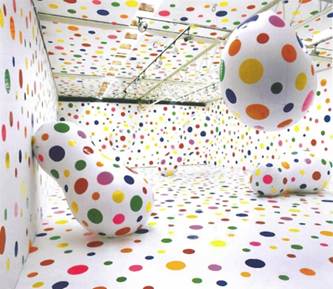
“Our earth is only one polka dot among a million stars in the cosmos. Polka dots are a way to infinity.”
Yayoi Kusama
I love this quote by Kusama and I also believe in the concept of our Earth being just a dot amongst infinite stars and planets in the cosmos.
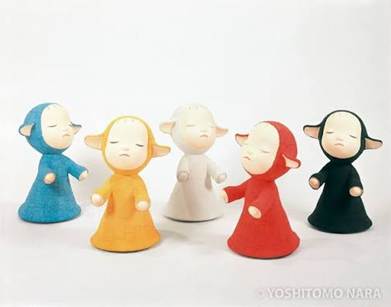
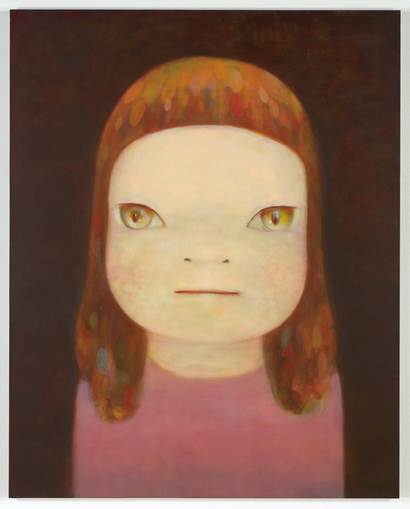
The other artist who had a remarkable impact on my art was Yoshitomo Nara who showed in a group contemporary Japanese art exhibit called Neo Tokyo at the MCA and he had a series of sculptures called the Little Pilgrims some big dish paintings and lots of small drawings mainly on envelopes pinned up on the wall. Out of all his work it was the drawings that transfixed me and was sort of a mix of manga drawing and cute Japanese culture or “The term “kawaii” translates to “cute” or “adorable” in English, but its meaning in Japan goes beyond mere aesthetics to encompass a complex cultural concept with deep roots.”
During Neo Tokyo there was a young volunteer Japanese translator named Naoko Waki and her English was perfect as she had studied in New York in art history, I think.
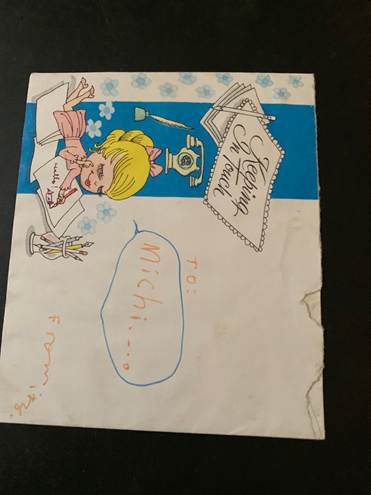
During the install Naoko approached Nara and I had told her I was a drawing artist so she organised a drawing swap between us he pulled out a gorgeous drawing on an envelope out of a simple cardboard folder and the next day I brought one of my drawings.
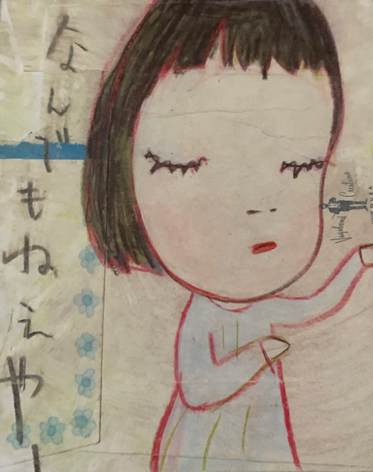
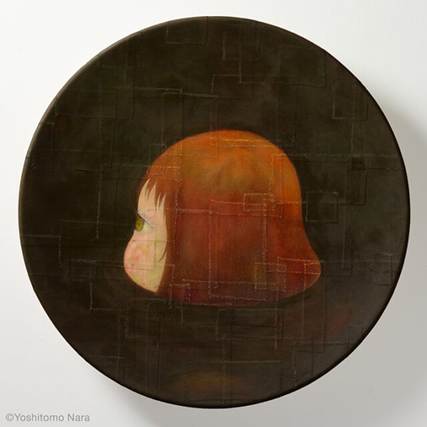
My favourite art documentary is Travelling with Yoshitomo Nara and I have watched it many times and own it on DVD and it explains a lot about Nara and his art made in 2007.
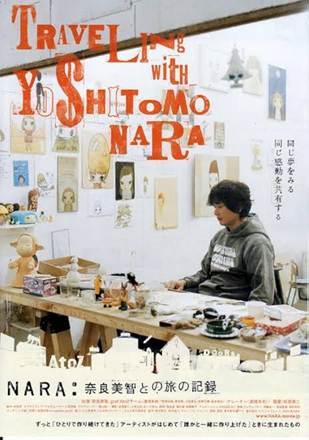
However as much as I adore Naras work not just his drawings but I watched the documentary more than twenty times loving most watching him drawing and painting but it also makes me feel ashamed about my own drinking and smoking cigarettes many years ago.
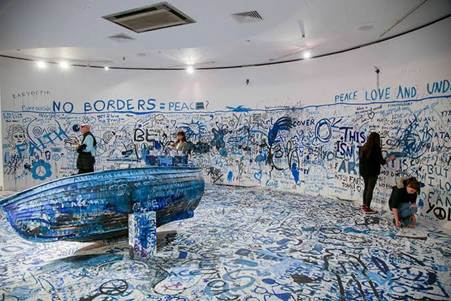
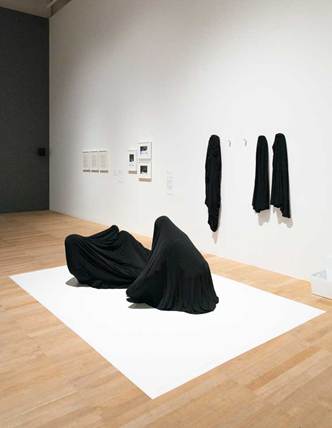
Yoko Ono is definitely an important contemporary Japanese Spiritual artist but I wrote quite a bit in my Fluxus essay about her.
However, this quote speaks to me and I aspire to also have no distinction between art and life.
“Art is my life and my life is art.”
Yoko Ono.
“Tatsuo Miyajima is a Japanese sculptor and installation artist who lives in Moriya, in Ibaraki prefecture, Japan. His work frequently employs digital LED counters and is primarily concerned with the function and significance of time and space, especially within the context of Buddhist thought. “
Wikipedia
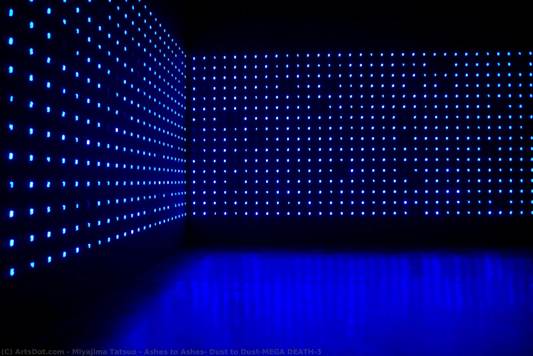
Tatsuo Miyajima: Folding Cosmos | Gallery Baton
I have never seen Miyajima’s work in person but its subject about time and space and Buddhism speaks to me.
“Develop a mind that is vast like space, where experiences both pleasant and unpleasant can appear and disappear without conflict, struggle or harm. Rest in a mind like vast sky.”
Buddha
This Buddha quote about time about cultivating one’s mind seems to cross over with the ideas in Miyajima’s work.
“Mariko Mori is a Japanese multidisciplinary artist. She is known for her photographs and videos of her hybridized future self, often presented in various guises and featuring traditional Japanese motifs. Her work often explores themes of technology, spirituality and transcendence.”
Wikipedia
Mori always reinvents herself in her photoshopped and CGI videos and is reminiscent of the photographer Cindy Sherman from America. Perhaps its inspired by Japanese manga and CGI science fiction movies.

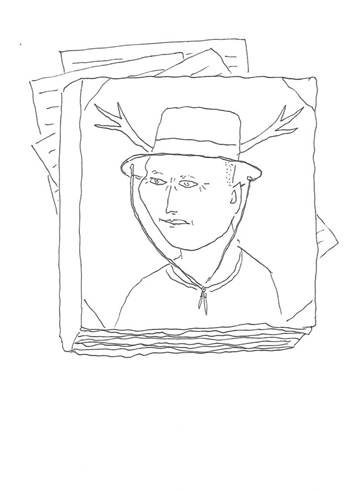
In conclusion I loved visiting Buddhist temples during my multiple trips to Japan and I buy a Yoshitomo Nara coffee table book every time a new one comes out and he is perhaps one of Japan’s most successful contemporary artists but it’s this evening as I write this essay that I can see a lot more connections between Japanese art through history and contemporary Japanese art.
