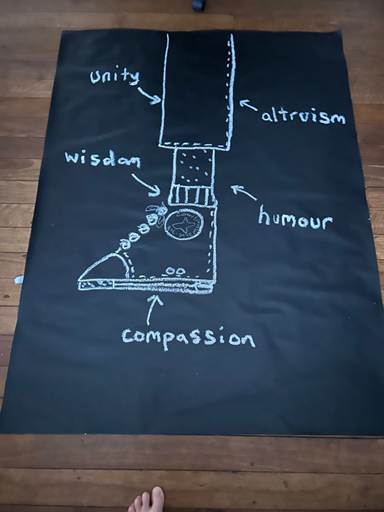
Contemporary spiritual painting takes many forms and I have included three Australian artists: Imants Tillers, Gemma Smith and Del Kathryn Barton in this essay but there was, many more international artists to choose from when I researched this essay and I have included an equal number of male and female artists. I think that there has always been an equal number of male and female artists through history particularly with painting but they haven’t been written into the history books until recently.
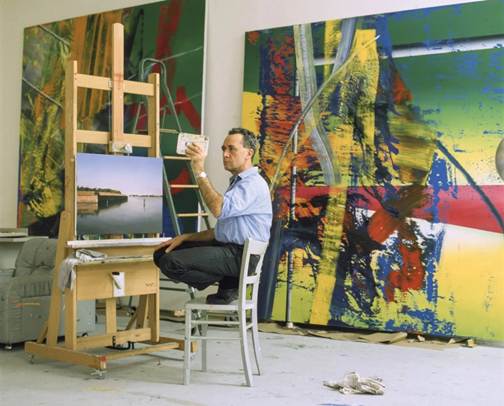
“Gerhard Richter (German: born 9 February 1932 is a German visual artist. Richter has produced abstract as well as photorealistic paintings, photographs and glass pieces. He is widely regarded as one of the most important contemporary German artists and several of his works have set record prices at auction, with him being the most expensive living painter at one time.”
Wiki
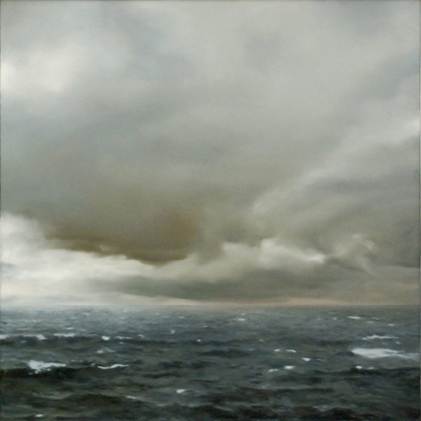
“For his landscape paintings, Gerhard Richter drew inspiration from Romanticism. He was very fond of German painter Caspar David Friedrich, an influence that is particularly palpable in his seascapes. Like most of his landscapes, “Seascape (Cloudy)” is based on several photographs collaged together into one single image.”
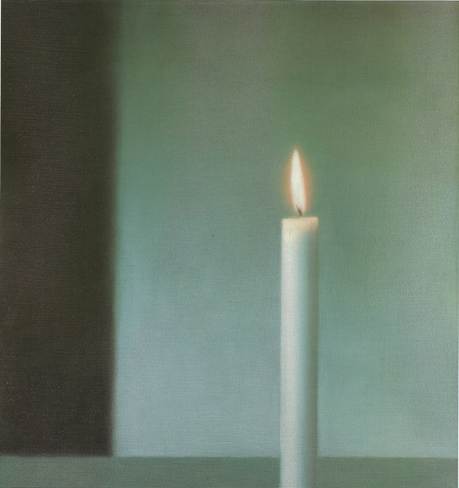
You might recognise this work from the cover of Sonic Youth’s album “Daydream Nation”. For photorealist paintings like this one, Richter blurred his motives using brushes, squeegees or his hands. In his notes, he wrote: “I blur things so that they do not look artistic or craftsman like but technological, smooth and perfect. I blur things to make all the parts a closer fit.”
Wiki
I am a huge fan of Richter’s paintings and I saw a retrospective of his paintings at GOMA in Brisbane a few years ago. He has two distinct styles one super realistic and one abstract and it’s the super realistic ones that I love most. My favourite is the candle painting made in 1982. I find it very mysterious and spiritual.
“Chance determines our lives in important ways.”
Gerhard Richter
I agree with this Richter quote and I feel chance and serendipity are important parts of art and life. It also reminds me of the conceptual artist John Cage whose art and music relied heavily on chance.
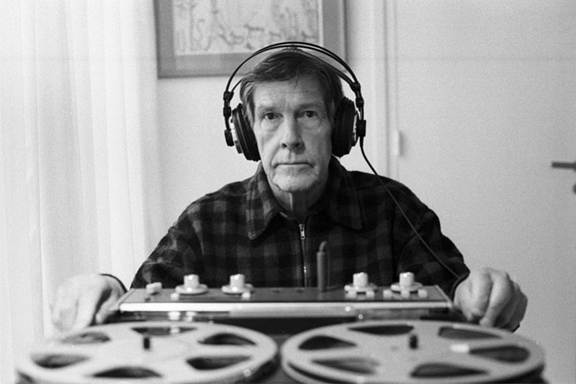
“I believe in painting and I believe in eating too. What can we do? We have to eat, we have to paint, we have to live. Of course, there are different ways to survive. But it’s my best option.”
Gerhard Richter
I find this Richter quote fascinating and drawing for me is just like sleeping, walking, or swimming. I do at least ten drawings a day and there is no resistance and it comes naturally.
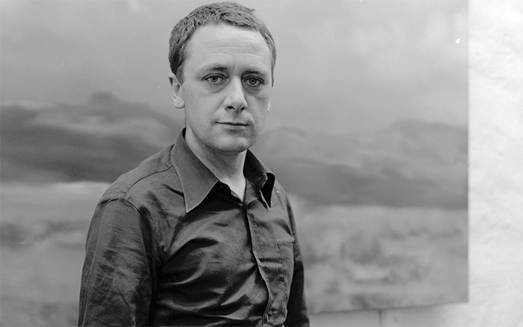
“Imants Tillers (born 1950), is an Australian artist, curator and writer. He lives and works in Cooma, New South Wales.”
Wiki
“Tillers’ use of appropriation can be read more broadly as a negotiation of the condition of distance experienced by Australian artists, particularly from other centres of cultural production.”


“Nature speaks: AT suggests a travelogue of the region, from Bunyan to Nimmitabel; the central text ‘There is no horizon’ – which appears in a number of works in the series – can be read as a reference to landscape in Aboriginal art, where the perspective is often an aerial one.”
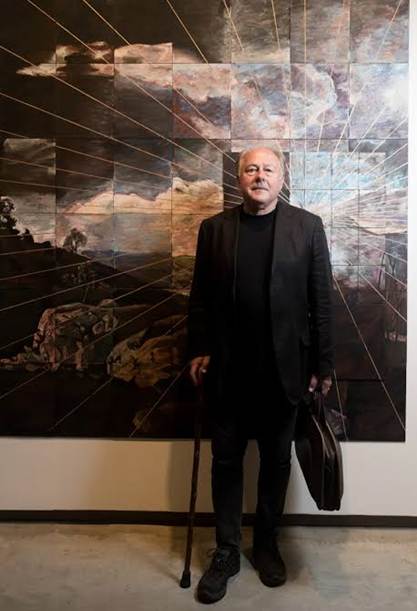
Tillers an Australian artist makes big paintings of lots of small board canvas’s put together and his paintings are the epitome of postmodern appropriation.
“Postmodern appropriation is the artistic strategy of intentionally borrowing, replicating, or altering pre-existing images, objects, and styles to create new meanings, challenging traditional notions of originality, authorship, and high art. Emerging in the 1960s-70s and peaking in the 1980s, it uses techniques like irony, pastiche, and recontextualization to critique culture, consumerism, and power, often blurring the lines between pop culture and fine art. “
Tillers massive paintings are usually appropriations of other artist paintings with text over the top. They recontextualize the original ideas in the artworks into the context of the current era.
The first two spiritual artists in this essay have been male but I have a coffee table book at home called Vitamin P3 New Perspectives in Painting and last night I went through it rather quickly and chose reproductions of paintings that interest me and put post it notes on them and hope to have an equal number of female and male spiritual painting artists in this essay. I feel one of the most important attributes of spirituality is having a balance of male and female energy.
“Lucas Arruda (born 1983, São Paulo), is a Brazilian painter living and working in São Paulo, Brazil. He received his Bachelor of Fine Arts from Faculty of Santa Marcelina, São Paulo, Brazil in 2009. He was at the forefront of a generation of artists in Brazil who reclaimed painting in an art scene then largely dominated by conceptual art. He is known for his atmospheric landscape paintings that exist at the border between abstraction and figuration, between mnemonic and imaginative registers. Characterized by their subtle rendition of light and a meditative quality, Arruda’s landscapes are charged with visual as well as metaphysical questions.”
Wiki
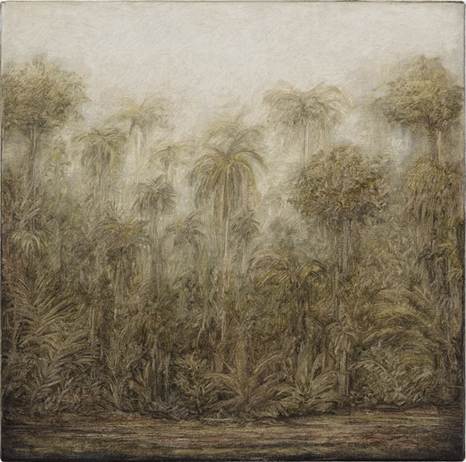
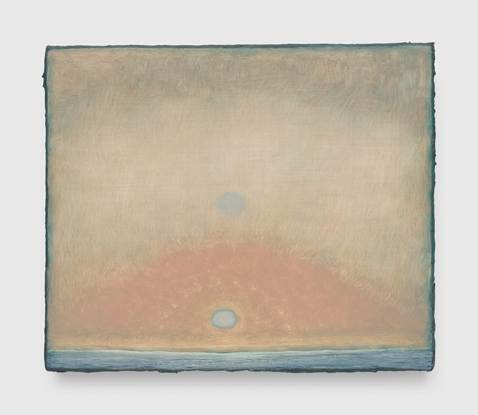
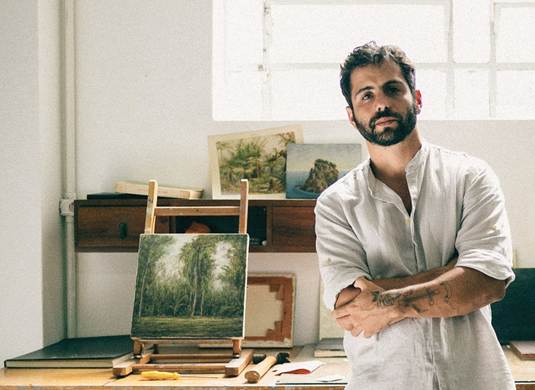
I like Lucas Arturo’s paintings as the use of colour is sage and they have a day dreamy mystical quality. I also like how they exist between landscape and abstract minimalism.
“McArthur Binion (born 1946) is an artist based in Chicago, Illinois. Binion was born in Macon, Mississippi. He holds a BFA from Wayne State University (1971) in Detroit, Michigan, and an MFA from Cranbrook Academy of Art in Bloomfield Hills, Michigan. He was a Professor of Art at Columbia College in Chicago from 1993 to 2015.”
Wiki
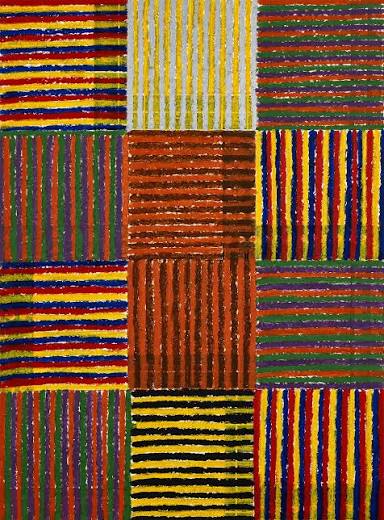
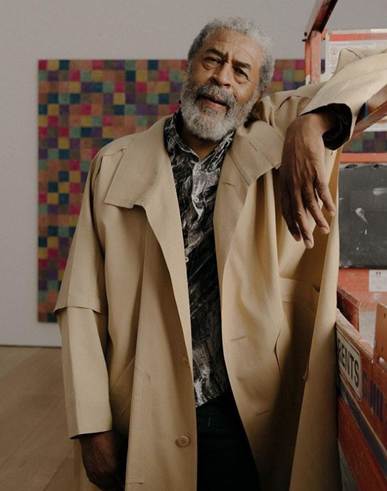
I like McArthur Binion’s paintings and the abstract mix of simple lines and shapes is mesmerising. I feel they are deeply meditative.
“Masaya Chiba (born 1980) is a Japanese contemporary artist based in Tokyo known for witty, figurative oil paintings that blend surrealism with sculpture, still life, and installation. His work often stems from assembling studio objects—such as potted plants or wood—which are then meticulously reproduced on canvas to explore the boundaries between 2D and 3D, often with a “sideward” or unconventional display. “

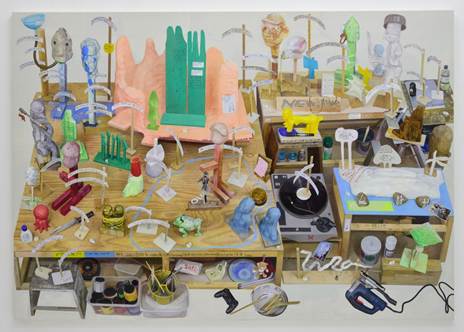
I like how Masaya Chiba uses a mix of painting, sculpture and installation as in my own work I have a mix of different mediums together such as sculpture, performance, photography, drawing and video.
“Mary Corse (born 1945) is an American artist who lives and works in Topanga, California. Fascinated with perceptual phenomena and the idea that light itself can serve as both subject and material in art, Corse’s practice can be seen as existing at a crossroads between American Abstract Expressionism and American Minimalism. She is often associated with the male-dominated Light and Space art movement of the 1960s, although her role has only been fully recognized in recent years. She is best known for her experimentation with radiant surfaces in minimalist painting,”

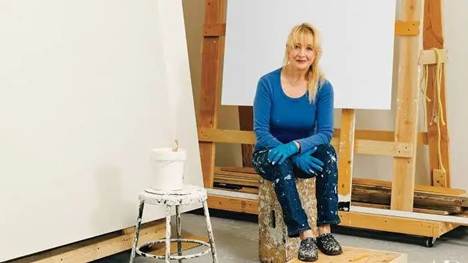
I think Mary Corse’s abstract minimal colour field paintings remake abstract minimal art by artists like Barnett Newman but in a more humanised way. They are also as mesmerising and profound as Rothko’s paintings that have similar rectangles of colour.

“A lot of my work talks about generations…the shifts that have happened in those—cultural, psychological—in Nigeria.”
Njideka Akunyili Crosby
“Born and raised in Nigeria, Njideka Akunyili Crosby studied at Swarthmore College, the Pennsylvania Academy of the Fine Arts, and Yale University, and her subject matter, references, and sentiments are informed by these diverse cultural sources. Her diasporic experience, her continued contact with her homeland and its cultural and social complexities, and her marriage to a white American all shape her subjects and narratives. In her methods, materials, and stylistic influences, Akunyili Crosby shows a deep awareness of contemporary artists from Robert Rauschenberg to Kerry James Marshall, while her visual vocabularies suffuse intimate domestic scenes with the products and riotous patterns of her African homeland. Akunyili Crosby produces large-scale drawings and paintings, frequently of interiors that suggest familiar narratives but retain elements of mystery and ambiguity. These scenes are often directly inspired by the artist’s own experiences and memories, and are populated by her family members, friends, and people she has met or recalls from back home.”
Moma website
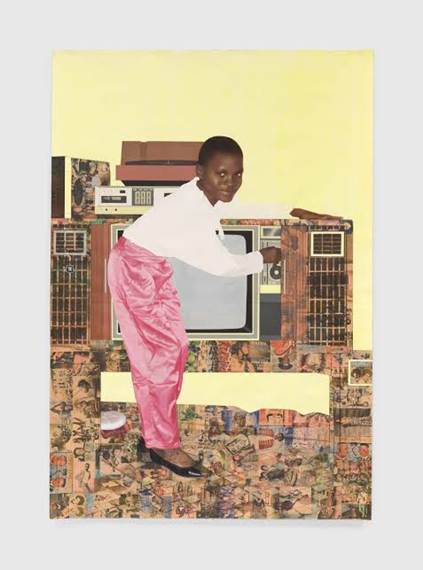
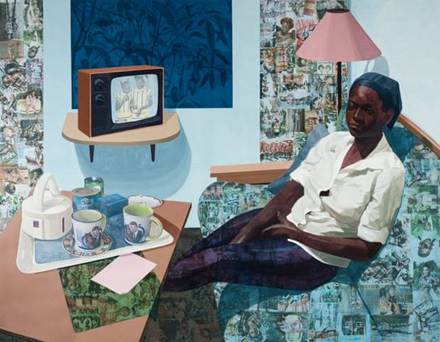
I love Njideka Akunyili Crosby’s paintings and I wrote about her in my contemporary spiritual drawing essay too. I love how its sort of realistic and fits into no fixed genre but it does provide a profound insight into contemporary Nigerian culture particularly women’s lives.
“Working in acrylic and at small- to mid-scale, Genieve Figgis produces paintings rich in colour, texture, humour, and the macabre. Through her work, she explores and sends up the idealization of luxury and leisure in paintings and photographs throughout art history.”
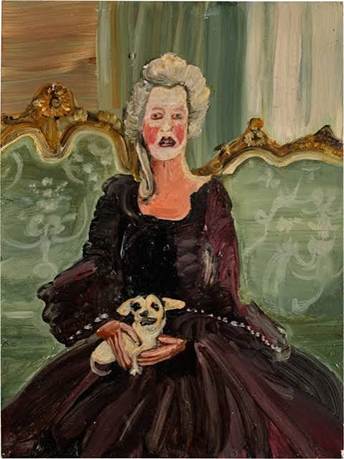
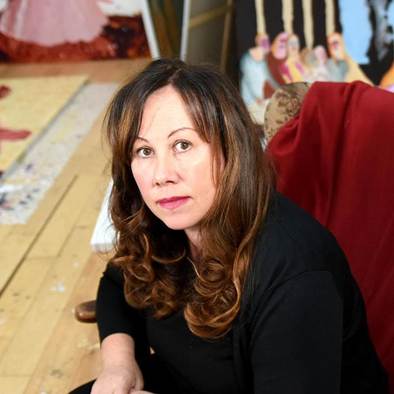
I like Genevieve Figgis’s paintings and they seem to speak to me about trauma in modern day life and through history for women.
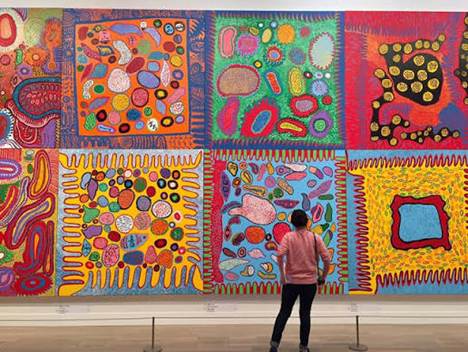
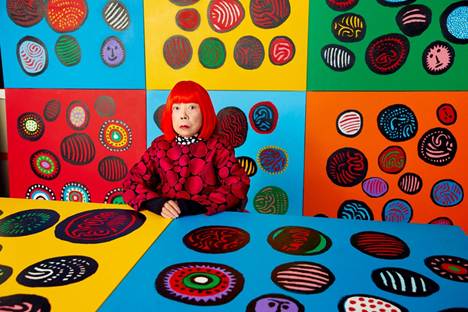
“Yayoi Kusama (草間 彌生, Kusama Yayoi; born 22 March 1929) is a Japanese contemporary artist who works primarily in sculpture and installation. She is also active in painting, performance, video art, fashion, poetry, fiction, and other arts. Her work is based in conceptual art and shows some attributes of feminism, minimalism, surrealism, art brut, pop art, and abstract expressionism, and is infused with autobiographical, psychological, and sexual content. She has been acknowledged as one of the most important living artists to come out of Japan, the world’s top-selling female artist, and the world’s most successful living artist. Her work influenced that of her contemporaries, including Andy Warhol and Claes Oldenburg.”
I have written before about Kusama and during my first week working at the Museum of Contemporary Art Sydney in 2000, I worked with another preparator Darcy Clarke to set up a Kusama installation. I have also seen a retrospective of Kusama’s art at GOMA in Brisbane at the same time the Gerhard Richter had a retrospective there. I remember lining up to see Kusama’s exhibition but it was worth the wait. Her big paintings in abstract shapes and primal colours were mesmerising.
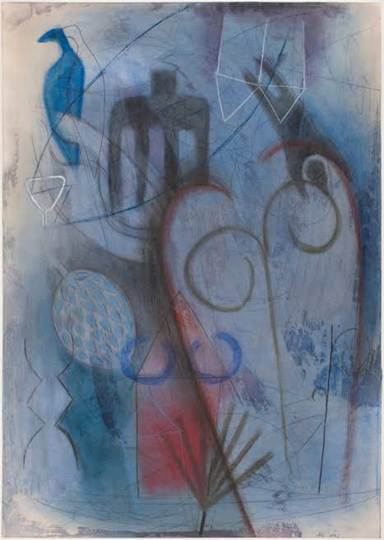
“Emmi Whitehorse (born 1957) is a Native American painter and printmaker. She was born in Crownpoint, New Mexico and is a member of the Navajo Nation. She lives in Santa Fe, New Mexico.”
I love Emmi Whitehorse’s work and I like how there is a spiritual mix of symbols and muted abstract colours. It reminds me about the essay I wrote on shamanism in North American Indian culture.
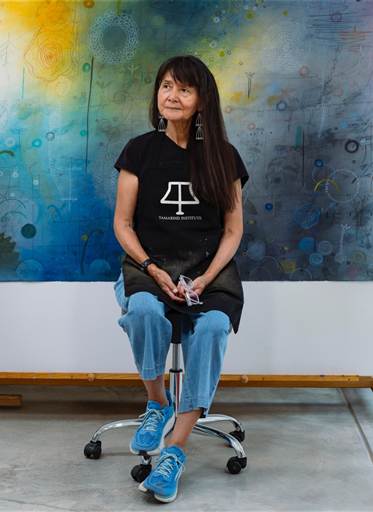
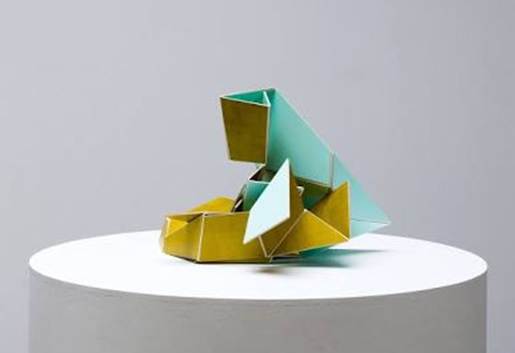
“Gemma Smith (born 1978) is an Australian painter and sculptor, who is Sydney-based. Smith has been the recipient of numerous grants and been invited to join multiple exhibitions. She is known for her continuous experimentations with colour and abstraction. Her work is held in museum, corporate and private collections across Australia.”
Wiki
I remember Gemma from when she was young about twenty-five years ago as we both worked at the MCA her minding exhibits and me as a preparator setting up shows but I didn’t know her very well. Her paintings are abstract and have a complex grasp of colour but its her geometric sculptures that I find most mesmerising.
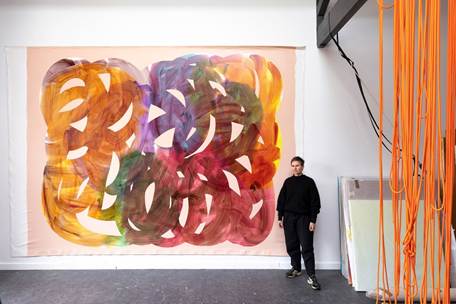

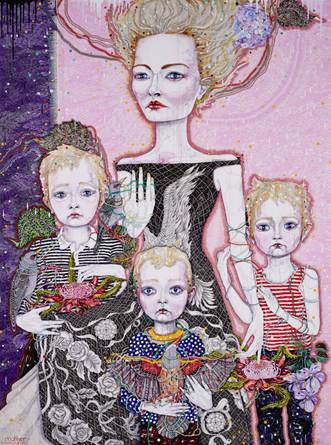
“Del Kathryn Barton is an Australian artist who began drawing at a young age, and studied at UNSW Art & Design at the University of New South Wales. She soon became known for her psychedelic fantasy works which she has shown in solo and group exhibitions across Australia and overseas.”
Wiki
I went to art school at the same time as Del me in sculpture her in painting and even at art school her art was amazing. However, I only met her a few times at art school but she was close friends with my friend who passed Katthy Cavaliere who I have written about a lot. I also included her drawing work in a separate essay. Del has won the highly prestigious Archibald Portrait Prize twice and last I heard there is a long line of collectors to buy her paintings. She is also a filmmaker and installation artist and child book illustrator and works with a fashion designer.
In conclusion contemporary international spiritual painting takes many forms including abstract, figurative, landscape and portraiture. However, the common thread is a search for something bigger or a search for the artists place in the world and beyond.