“Fluxus was an international, interdisciplinary network of artists, composers, and designers in the 1960s and 70s who blended different media to break down the boundary between art and daily life. Founded by George Maciunas, it was a “shared attitude” rather than a strict movement, often using humour, performance, and “anti-art” to challenge institutional art conventions.”
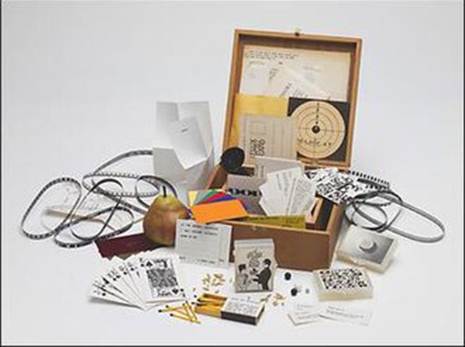
Key figures included: George Maciunas (founder), Yoko Ono, Alison Knowles, George Brecht and Nam Jun Paik.
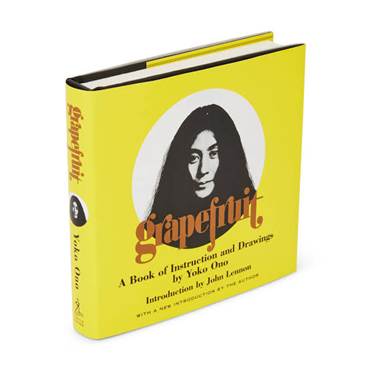
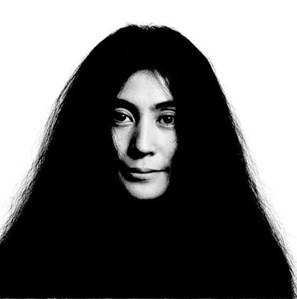
Yoko Ono has had a varied and remarkable career but she started out as a conceptual installation and performance artist as part of the international Fluxus art movement.
Later she also became a musician.
While I was working at the MCA in 2000 for the Sydney-Biennial I was catching a lift and there was, a few MCA staff in the lift and also Yoko Ono as she was the key artist for the biennial and she had several artworks including a performance piece at the Opera House.
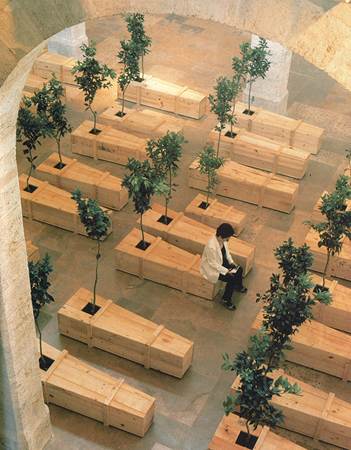
“At the 12th Biennale of Sydney in 2000, Yoko Ono famously exhibited Ex It (1998) at the Art Gallery of New South Wales. This installation consisted of 100 empty wooden coffins of varying sizes, each planted with a live tree, symbolizing life, death, and renewal, which stood as a memorable, poignant highlight of that year’s exhibition. “
“Nam June Paik was a crucial member of the international avant-garde Fluxus movement in the early 1960s, playing a key role in combining its anarchic, playful, and anti-aesthetic philosophy with emerging video technology. His work, often blurring the line between high art and everyday life, embodied the Fluxus spirit of breaking down artistic boundaries.
Role in Fluxus: Recruited by Fluxus founder George Maciunas, Paik was a central figure in the movement. While he sometimes diverged from Maciunas’s strict rules—even being jokingly “expelled” for performing in other experimental shows—he continued to produce Fluxus-inspired, audience-participatory, and chance-based art throughout his career.”
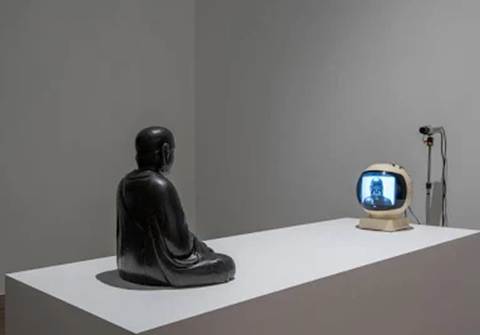
My favourite Nam Jun Paik artwork was a video sculpture called TV Buddha with a Buddha sculpture and early video camera videoing it and then shown on a little television. It was commissioned by famous Australian art collector and philanthropist John Kaldor.
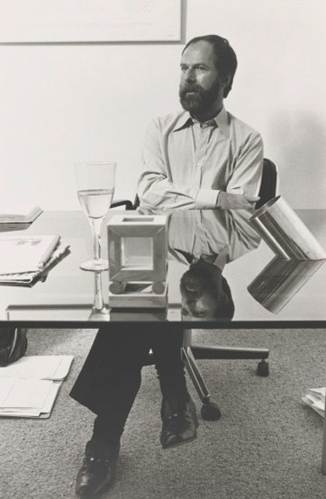
I have a personal connection with John Kaldor as many years ago I sent him some of my drawing works and other artworks and he kept most of them and even gave me some money for the drawings of him and his family.
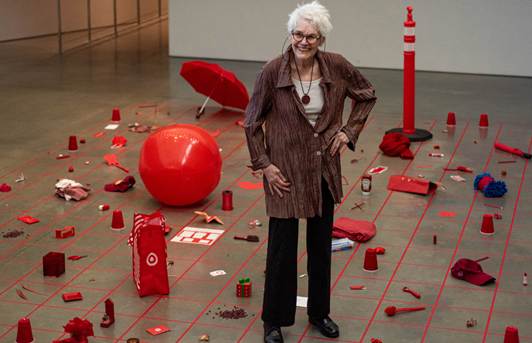
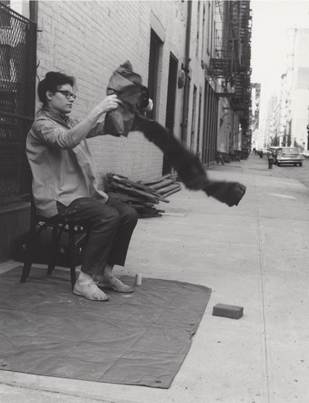
“Alison Knowles (April 29, 1933 – October 29, 2025) was an American visual artist known for her installations, performances, sound works, and publications. Knowles was a founding member of the Fluxus movement, an international network of artists who aspired to merge different artistic media and disciplines. Criteria that have come to distinguish her work as an artist are the arena of performance, the indeterminacy of her event scores and the element of tactile participation. She graduated from Pratt Institute in New York with an honour’s degree in fine art. In May 2015, she was awarded an honorary doctorate degree by Pratt.”
Wiki
In conclusion Fluxus art radically changed the direction of contemporary art and de-commodified the artwork to make a closer connection between art and life. I feel this was an incredibly complex, spiritual and intellectual shift.