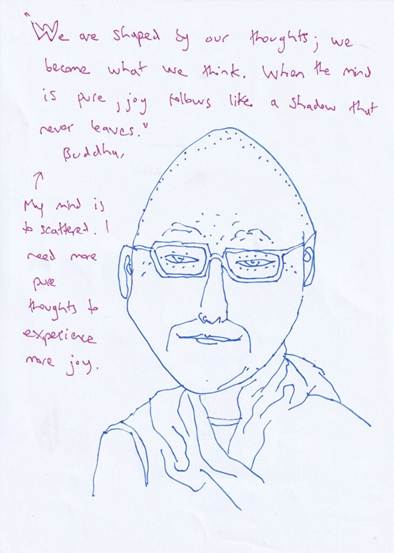
“A mandala is the psychological expression of the totality of the self.”
Carl Jung

I have seen Tibetan monks making colourful sand mandalas twice both on tables outside once at the Bellingen World Music Festival in the late nineties and once at a new age festival on the outskirts of Byron Bay about ten years ago. What I found most remarkable is that both times there was a very still day as they were working outside under marquees on tables and if it had been a windy day then the fine colour sand mandalas would have blown away.
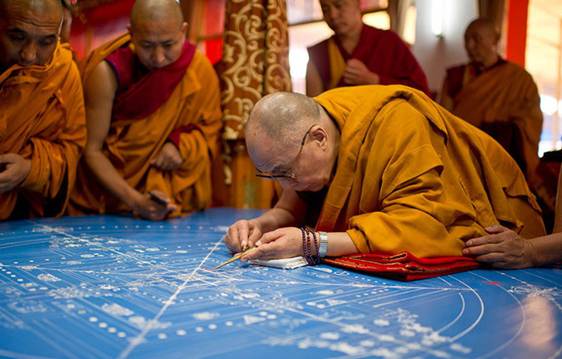
But even before seeing the monks in action making mandala’s I saw Carl Jungs Man and His Symbols book and on the cover was a Tibetan mandala.

“Carl Jung viewed mandalas as powerful, ancient symbols representing the totality of the self and the process of individuation (psychological wholeness). He believed they act as spontaneous, unconscious expressions of inner order, often appearing during times of personal chaos to reconcile opposites and map a path to mental unity. “
I love this quote about how Carl Jung saw mandalas and their incredible healing powers for the mind and soul for who that make them and those that view them. I have a Tibetan mandal poster in my living room and since putting it up has changed the energy in my apartment.
“Your vision will become clear only when you can look into your own heart. Who looks outside, dreams; who looks inside, awakes,” and “We are not what happened to us, we are what we wish to become,”
Carl Jung
This quote by Carl Jung speaks to me and when I feel mental chaos I look within and draw portraits of Mary Mackillop or Saint Francis and it restores my inner equilibrium.
On Life and Death: “Whatever is born is impermanent and is bound to die. Whatever is stored up is impermanent and is bound to run out. Whatever comes together is impermanent and is bound to come apart.”
Patrul Rinpoche, Words of My Perfect Teacher.
This quote by Rinpoche makes me realise how brief life is and I should take joy in every moment as life is always impermanent and one never knows when one is going to die.
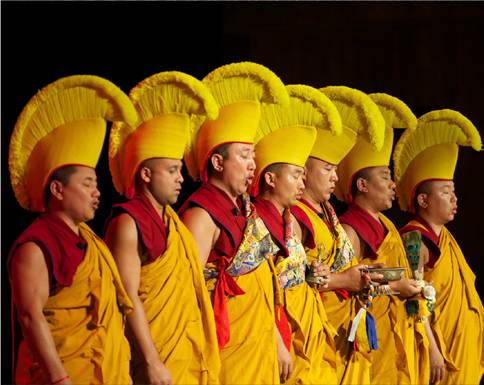
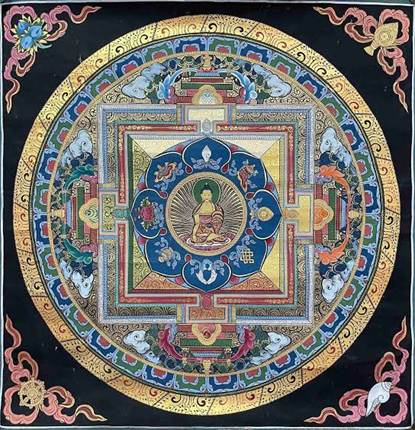
“A Tibetan mandala (kilkhor) is an intricate, symbolic representation of the universe and a deity’s palace, used in Tibetan Buddhism as a tool for meditation, healing, and spiritual transformation. Often created by monks using coloured sand over days or weeks, these, or painted thangkas, visualize enlightened states. The, often, intentional destruction of the sand mandala symbolizes the impermanence of life. “
My favourite aspect of this text is about that once the mandalas are painstakingly finished then they are dismantled to illustrate the impermanence of life.
“Key Aspects of Tibetan Mandalas:
Symbolism: Mandalas represent a “centre of the circle” (the deity) and surrounding, detailed, and symbolic palace, representing a divine, perfectly ordered universe.”
I like the idea of a deity in the middle with surrounding detailed symbolic palace of the universe. When I personally meditate on the universe I realise my insignificance in the bigger scheme of things.
“Construction: Sand mandalas are made using millions of grains of coloured powder, applied with metal funnels (or chak-pur).”
This is very interesting about how the sand mandalas are made with metal funnels.

“Purpose: They serve as aids to meditation, helping to transform ordinary minds into enlightened ones and promoting healing and positive energy.”
This idea of mandalas healing the mind and aiding meditation is fascinating. My ten drawings a day project is very different but I find all art can have a healing process and breed positive energy.
“Impermanence: Following completion, the, often complex and, sand mandalas are ritually dismantled, reminding observers of the fleeting, transient nature of existence.”
The idea of dismantling the finished mandala as a reminder of the transient nature of existence is fascinating. It makes me think of my own mortality.
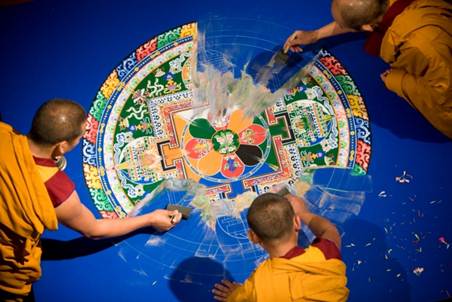
“The Dalai Lama has spoken about mandalas primarily in the context of Tibetan Buddhist art, focusing on their symbolic, transformative, and meditational purposes. In particular, he has noted that these intricate designs serve as tools for developing inner spiritual qualities like compassion and wisdom. He highlights the symbolism of mandalas, stating that all elements in a Tibetan religious painting have symbolic value that aids in developing inner spiritual qualities. He regards the deities within mandalas as representing characteristics of enlightenment. The Dalai Lama explains that paying respect to these deities is akin to paying respect to wisdom and compassion, inspiring individuals to cultivate these qualities. He emphasizes that the ultimate goal of such practices is to cultivate inner goodness and compassion. The creation and destruction of sand mandalas are seen as a meditation on impermanence.”
This text about the Dalai Lamas views on mandalas is fascinating and I most particularly like the idea that they breed positive attributes of wisdom and compassion.
A quote by the Dalai Lama (from the foreword of ‘The Mystical Arts of Tibet’):
“All the elements of a Tibetan religious painting have a symbolic value. These symbols serve as aids to developing inner qualities on the spiritual path. The deities themselves are regarded as representing particular characteristics of enlightenment. For example, Manjushri embodies wisdom and Avalokiteshvara (Chenrezig) embodies compassion. Paying respect to such deities therefore has the effect of paying respect to wisdom and compassion, which in turn functions as an inspiration to acquire those qualities within ourselves’.
I love this quote and love the idea that different deities in the mandalas represent different attributes such as wisdom by Manjushri and Avalokiteshvara (Chenrezig) embodies compassion. He states that if we pay respect to those deities then one acquires those attributes in ourselves.
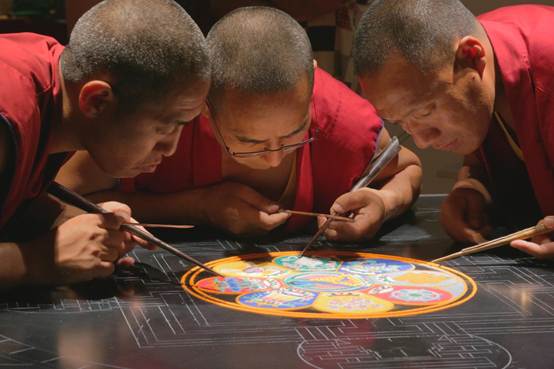
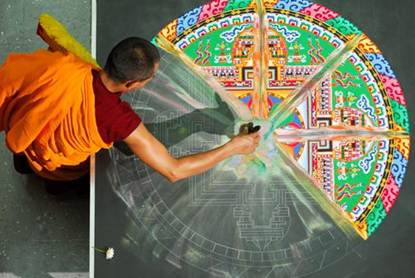

In conclusion I find Tibetan mandalas incredibly intricate, spiritual and mesmerising to look at but I find the most amazing aspect is that once they are completed, they are dismantled to show the impermanence of life.