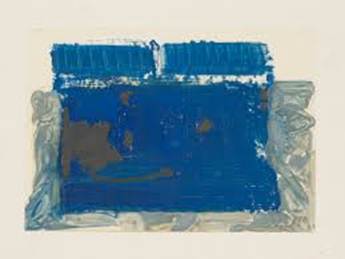
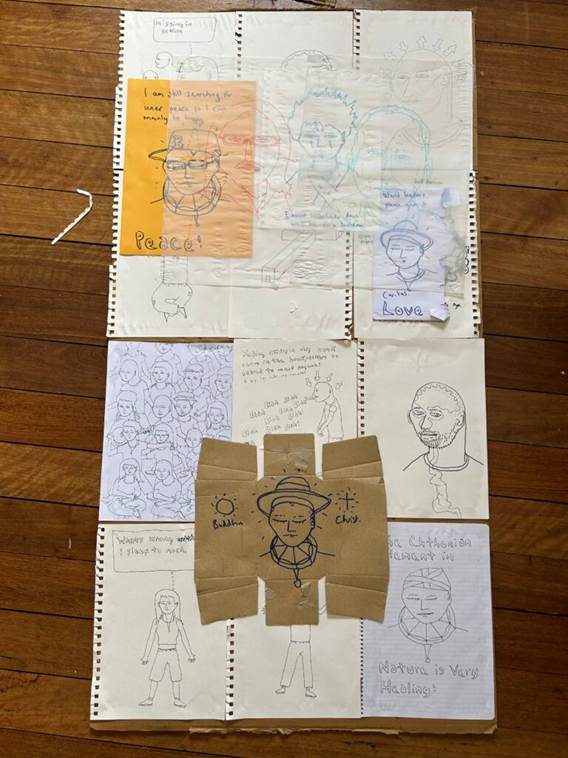
I made the title then thought that Kapoor and Laib are contemporary and still working but Beuys was a Fluxus artist most active in the 1960s and 1970s.
“Fluxus artists were members of a loosely organized, international avant-garde network in the 1960s and 70s, founded by George Maciunas, who aimed to break down barriers between art and life by promoting “living art,” anti-art, and interdisciplinary “intermedia” experiences like performances, happenings, and conceptual works, emphasizing spontaneity, process, humour, and audience participation over traditional artistic objects.”
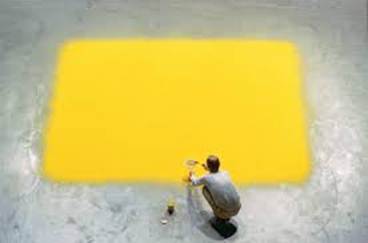
Wolfgang Laib uses natural materials such as flower pollen and beeswax to manifest a sense of deep spiritualism through incredibly slow and time-consuming process and my favourites are the yellow sublime pollen squares.
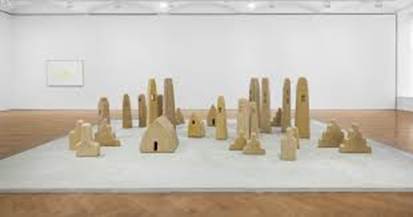
Wolfgang Laib’s quotes like these explain his art practice: “I could not make it myself, I could not create it myself, but I can participate in it” and “It upsets me a little when they ask me if I can explain it. But it’s pollen. How can I explain the sky or the sun to you?”
When I look at Laib’s art in coffee table books they inspired me a great deal with my own art and I don’t imitate his art so much but I do have a sort of window in my mind open to conceptual artworks with a spiritual angle.
I love the following quote by Annish Kapoor and I also try to make wholeness in my art out of the confusion and uncertainty in my life:
“We live in a fractured world. I’ve always seen it as my role as an artist to attempt to make wholeness.
I discovered Kapoor’s work in a book from a bookstore in Sydney’s CBD in George Street after dropping out of art school and returning and I was lost and Kapoor’s sculptures and drawings in the book inspired me and I started making big clay sculptures with doorways reminiscent in a sense of Kapoor’s early pigment covered sculptures and his limestone blocks with rectangular, oval and square openings which it was like gazing into a spiritual void.
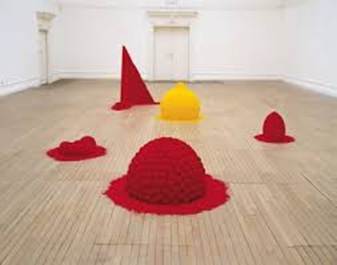
This affinity with Kapoor’s sculptures was reinforced when I saw his sculptural installation at the art gallery of NSW with blocks of limestone with oval openings on top and when you looked inside it was just eerily black as if you were looking into infinity.

Soon after discovering Kapoor’s work, I found a book at the art school COFA library about the German artist Joseph Beuys and his sculpture, installation, photographic and performance art blew me away but it was the complexity and sensitivity of his lead pencil and watercolour drawings that had the biggest impact on me. I particularly liked the drawings where he drew the insides of figures both literally and spiritually.
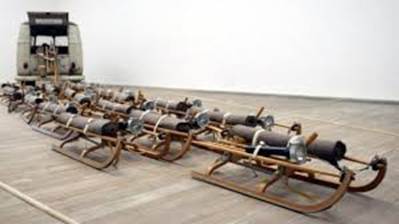
My first girlfriend went on a trip to Europe while we were together and brought me back a book of Joseph Beuys drawings and from time to time, I still leaf through it marvelling at the sensitivity and complexity of his drawings.

“I think the tree is an element of regeneration which in itself is a concept of time.”
Joseph Beuys
I like this quote by Beuys about the tree which is itself a concept of time.
In conclusion these three artists all had a remarkable impact on my art over the past three decades and I hope I have grown out of imitating them but also amalgamating their ideas into my own art.